
Blog
What Is Vibe Coding? (And Why Your Next Project Might Start Without a Developer)
Vibe coding lets non-technical people prototype apps using plain English. Here's what it is, which tools to try, and how one client used it to cut a £25k build down to under £9k.
You might have seen the term "vibe coding" floating around recently. It sounds like something someone invented to wind up developers, but it's real, it's moving fast, and it's already changing how some of my clients approach new projects.
Here's what it actually means — and what you can do with it.
The short version
Vibe coding means describing what you want to build in plain English, and letting an AI tool write the code for you. You don't write a single line of code yourself. You describe the app, tweak it by chatting with the AI, and end up with something that actually works — at least well enough to show people.
The term was coined by Andrej Karpathy (one of the founders of OpenAI) in early 2025. Within months, tools built around the idea had millions of users. It's not a gimmick.
A real example: Treatdeck
One of my clients had an idea for a tool to help creative agencies manage client-facing links — presentations, treatments, pitch decks — all under one shareable URL that could be updated without resending anything.
Good idea. Normally that's a four-to-five-figure project before anyone's written a line of real code.
Instead, they built a working prototype themselves using Base44 (now part of Wix, interestingly). Not a mockup. Not a wireframe. An actual functioning app — with a database, user accounts, and a working interface.
Then they came to me.
Rather than starting from scratch, we used their prototype as the brief. The design, the flows, the feature set — it was all there. I rebuilt it properly: production-grade, secure, scalable. The kind of thing that can handle real users and real data.
The result? We cut what would've been a £25k build down to well under £9k. Same product. A fraction of the cost.
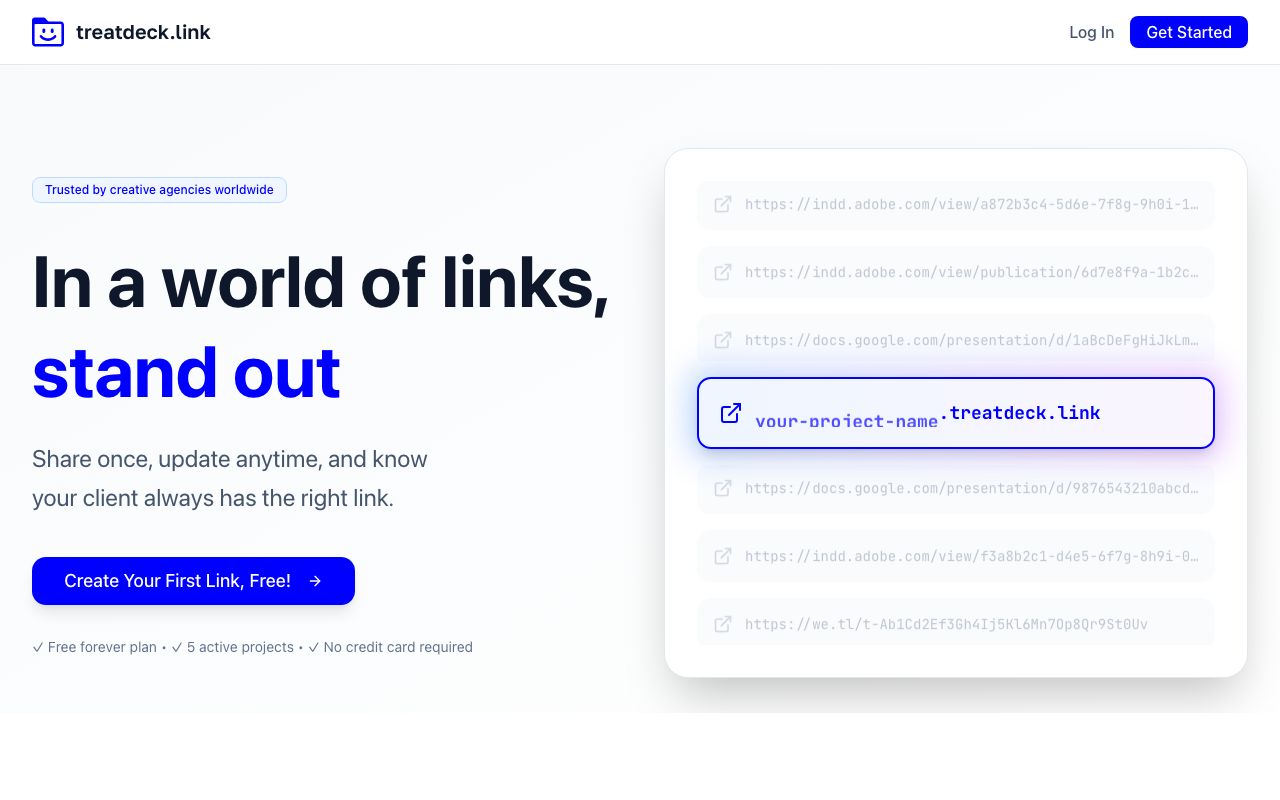
That prototype was worth its weight in gold. Not because it was production-ready — it absolutely wasn't — but because it answered all the hard questions before I got involved. You can read the full case study on how we built Treatdeck.
Tools worth knowing about
If you've got an idea kicking around, here's where to start:
- Base44 — what my client used. Good for apps with user accounts, databases, and proper logic. Now owned by Wix.
- Bolt.new — fast, browser-based, handles more complex apps well.
- Lovable — particularly good UI output. Worth a look if the interface matters to you.
- v0 by Vercel — better for generating interface components than full apps, but excellent at what it does.
Most have a free tier. You can get surprisingly far before paying anything.
Where it falls apart
I'll be honest with you: these tools produce code that I wouldn't ship to production. It's often messy, inconsistently structured, and doesn't account for the things that matter at scale — security, performance, maintainability.
If your idea gets any traction, you'll need someone to rebuild it properly. But that's fine. That's the whole point.
The prototype gets you to a real conversation with a developer with something to show, not just something to describe. That changes everything — the brief is clearer, the scope is defined, and there's far less wasted time going back and forth on "but what did you mean by..."
The move
If you've got an idea for a tool, a platform, or an internal system — have a go at building it yourself first. Spend a weekend on it. Get something you can click through. Then bring it to a developer.
You'll spend less. You'll get more. And you'll probably have a lot of fun in the process.